
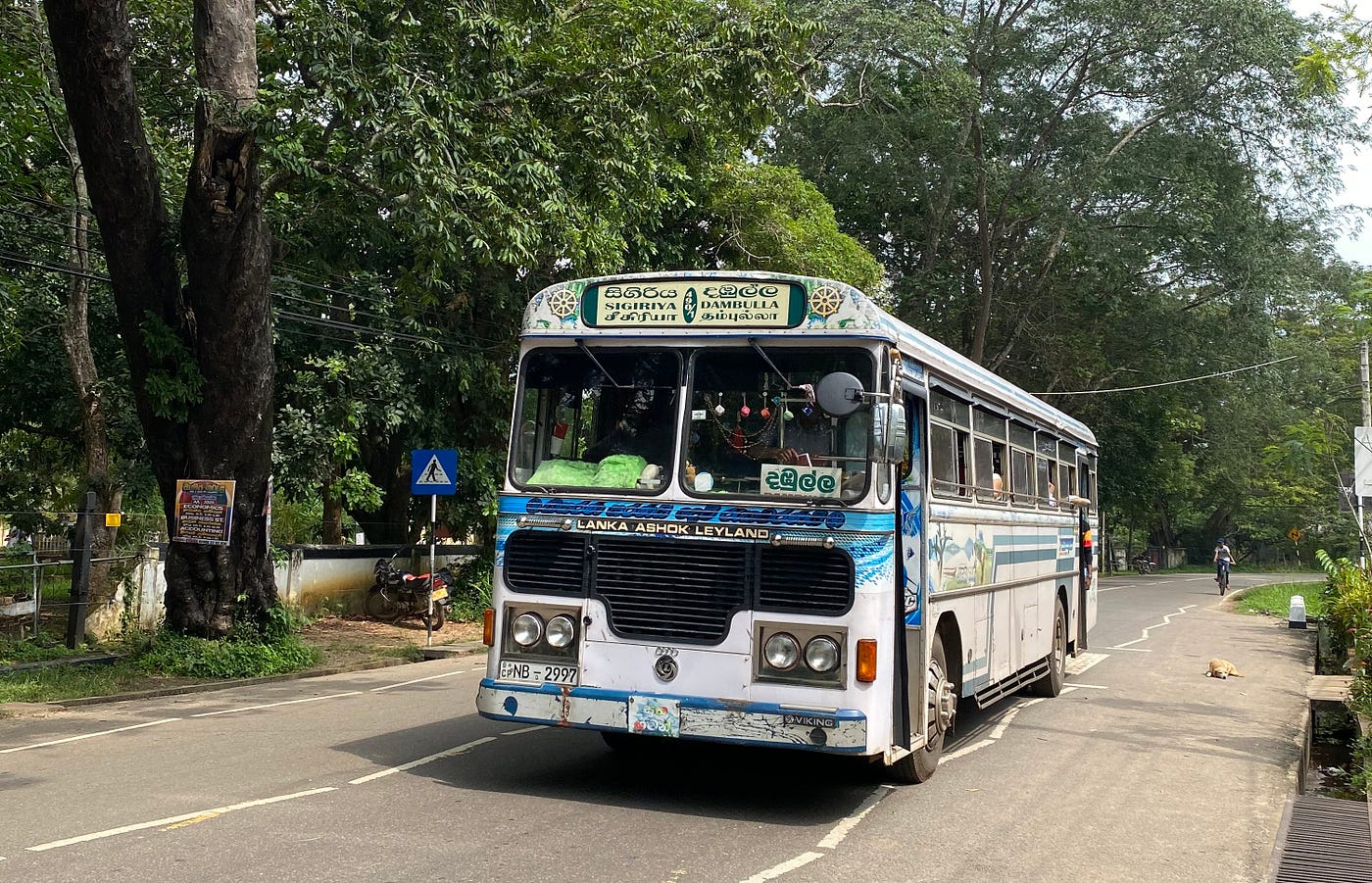
At the end of 2023, I took a solo trip to Sri Lanka. Most travelers choose to hire a private car to save time and avoid hassle, but as a solo traveler I really didn’t want to—it’s expensive (compared to buses), and the thought of staying in silence for hours inside a car with a driver made me uncomfortable. Despite my Sri Lankan friend strongly advising against it, I decided to explore the country by bus. I made it back safely, so now I’m sharing my experience to help anyone planning to do the same avoid the confusion I had at first.
Experience Sri Lanka’s Door-Open, Full-Speed Buses
Getting On the Bus


Once you find the correct bus stop and route, simply wave at the approaching bus to get it to stop. Toss your bag into the storage area, grab a seat, and the conductor will come by later to collect the fare. They usually give change, but the fare is so cheap that I’m not sure they can break large bills—better to prepare small denominations.


When you pay, the conductor will hand you either a printed slip or a handwritten note with the fare amount.
Where You Can Get On and Off


Bus stops in Sri Lanka are mysterious. Aside from major terminals, most are extremely simple. The “luxury” version is a brick shelter; the basic ones may only have a sign with a bus icon. Some stops have no signs at all—locals just hop on and off at intersections.
When I stayed in Sigiriya, I asked my guesthouse owner where to catch the bus to Dambulla. He told me, “Just walk to the junction.” But when I got there, I saw nothing resembling a bus stop. Feeling unsure, I walked further to something that looked like a bus station. Only near the end of my trip did I realize that the junction itself was the stop.
How to Know When to Get Off
The easiest method: ask your guesthouse where the nearest stop is, then track your location with Google Maps and prepare to get off as you approach.
My most memorable experience was on the bus from Hiriketiya to Mirissa. Google Maps showed the next stop as my destination, so even though the map still looked like I had 1–2 km left, I pressed the stop button early. The conductor immediately looked around, spotted me, gestured for me to move to the door, and the driver slowed down. The conductor signaled for me to get off before the bus completely stopped.
It felt strange but everything happened too fast. After I got off, I checked Google Maps and realized I was still more than a kilometer from my actual stop. I had no choice but to walk to Mirissa.
My advice: stand up slightly early so you don’t miss your stop—these buses really fly—but don’t press the button too early.
I’d read online that if you tell the conductor your destination, they’ll notify you when to get off. That never happened to me even once, so keep your map app open!
How to Tell the Driver You Want to Get Off

Two options:
- Press the stop button – It’s usually on the ceiling. Most buttons make no sound when pressed (at least for the buses I took), so every time I pressed it, I felt super unsure, like I had no idea whether it actually worked or not.
- Walk to the front and speak to the driver or conductor – My backpack was next to the driver anyway, so I usually walked forward, grabbed my bag, and told them directly.
How Cheap Are Buses?
Despite private car and tuk-tuk prices rising significantly since the pandemic, bus fares barely changed. They’re incredibly affordable. Here’s what I paid:
Colombo Fort → Airport: LKR 960 (≈ NT$96; likely a private airport bus because the fare was way higher than what I’d found online)
Sigiriya → Dambulla: LKR 100 (≈ NT$10)
Dambulla → Kandy: LKR 283 (≈ NT$28)
Ella → Tissamaharama: LKR 515 (≈ NT$51)
Tissamaharama → Hiriketiya: LKR 360 (≈ NT$36)
Hiriketiya → Mirissa: LKR 240 (≈ NT$24)
Mirissa → Galle: LKR 160 (≈ NT$16)
My Bus Experience in Sri Lanka
Sri Lanka isn’t a mainstream travel destination, so Chinese information online is scarce. English information exists, but much of it is outdated. Bus routes feel chaotic—stops usually have no route maps, sometimes not even signs.
Before going, I heard all kinds of stories:
- buses drive with the doors open
- no air-conditioning
- tiny seats, extremely crowded
- drivers speed like they’re in an action movie
- loud Sri Lankan music blasting inside
After experiencing it myself, I can confirm all of it. And honestly—it was fun. Compared to sitting stiffly in a private car, I preferred grabbing a window seat, feeling the breeze, and watching the scenery fly by. Sometimes vendors even hop on selling snacks so you can eat while enjoying the view.
Before reaching the southern region, bus information was extremely hard to find. Google Maps wasn’t helpful for routes—only for tracking my location. Each day I boarded with mild anxiety, unsure if I’d actually reach my destination. Thankfully, everything worked out.
Once I reached the south, Google Maps became reliable again; you can check routes and stops clearly.
As for air-conditioning: I never encountered a single A/C bus. But since I visited during the end of rainy season, temperatures were mild and sitting by the window was comfortable. This was completely different from the vlogs I’d watched where people said their clothes kept drying and getting soaked again from the heat.
In the end, the old saying is true—ask locals when in doubt. Most Sri Lankans I met were warm and eager to help.
Bonus: Colombo City → Airport Bus
If you don’t want to take a taxi or tuk-tuk, buses are a good option. Near Colombo Fort Station, there are stops where you can catch an airport bus.
There are two types:
- Slower bus via local roads – Takes 2–3 hours.
- Highway express bus – Takes about 1 hour.
Online info is confusing. Many people mention Bus 187; some say it’s the express, others say it’s the slow one. According to the luggage storage staff at the train station, Bus 187 is the slow route. He told me that if I’m in a hurry, I should wait at the “Airport Bus Stop,” where the express bus passes.


When I went, I couldn’t find the stop at all until I asked around and was told to wait next to a small grocery store near Platform 1.

The bus was a cramped 12-seater minivan with no luggage space. It was packed—people were even standing in the aisle. Backpacks are manageable, but suitcases would be impossible.
Fare information online ranged wildly (LKR 110–500). I kept about LKR 700 on me thinking it was enough, but upon arrival the conductor asked for LKR 960. I didn’t have enough, which was embarrassing. Fortunately, he just took all the cash I had and let me go. I’m still not sure whether I was overcharged or simply pitied.
Bonus: Dambulla → Kandy Bus Information
I had read that you should board at the Dambulla Main Bus Station to get a seat. When I arrived, I did see a platform labeled “Kandy,” but no buses to Kandy ever appeared. After asking locals, I learned that buses no longer depart from the main station. You must wait at the Dambulla Bus Stand, where you catch passing buses headed to Kandy. Many buses go there, but most were completely full when they arrived.

While waiting, I ran into a tuk-tuk driver I had met the previous day. He told me I should actually wait at the stop across from Cargills Food City, around the spot near Budget Cafe. If you’re coming from Sigiriya, most people will get off there. If you see a crowd getting off—follow them.

Leave a Reply